
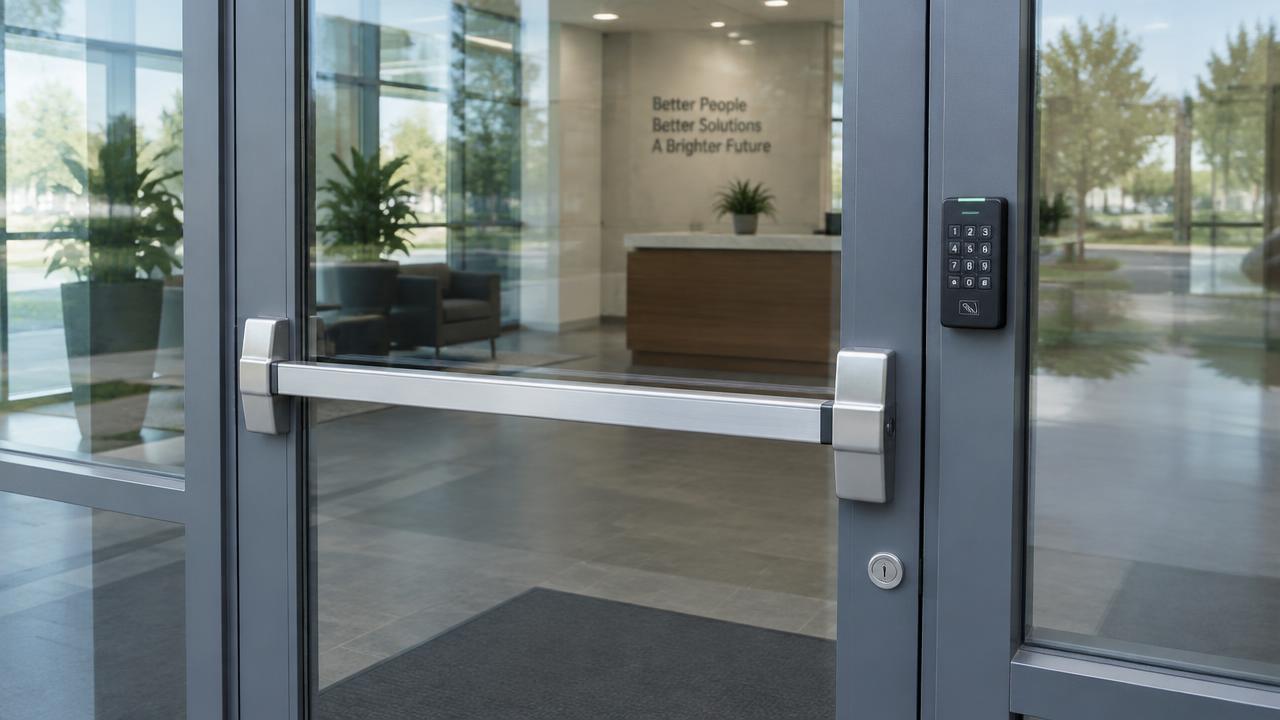
Access control replaces keys with cards, fobs, or codes tied to specific people and doors. Managers can grant or cut off access without rekeying anything, see who entered and when, and set different permissions for different staff. It fits offices and buildings with frequent staff changes.
Who Needs This Service?
- Offices with frequent staff turnover who don't want to rekey every time
- Buildings needing entry logs for specific doors
- Businesses that want to restrict certain rooms to certain staff
- Multi-tenant buildings needing separate access for each tenant
- Owners who want to cut off a former employee's access instantly, remotely
What's Included
- Assessment of which doors need controlled access
- Card, fob, or keypad reader installation at each entry point
- Credential setup for staff, tenants, or departments
- Configuration of access schedules and permission levels
- Integration with existing door hardware where possible
- Training for whoever will manage the system day to day
Our Process
- 1
We review your building and identify which doors should be controlled.
- 2
We recommend a system type based on your building and budget.
- 3
We install readers and wiring at each access point.
- 4
We set up credentials and permissions and walk you through management.
What This Service Costs
Cost depends on the number of doors, the type of reader, and whether wiring already exists at those doors. A single-door keypad setup is far simpler than a multi-door card system with central management.
We assess your building and give a written quote before ordering any hardware or starting installation.
How Access Control Systems Work
Each door gets a reader tied to an electronic lock or strike. Staff carry a credential, a card, fob, or code, that the reader checks against a permissions list before releasing the door.
Permissions can be set by person, by door, and by time. A cleaning crew might get access only after hours. A manager might get every door around the clock. Changes are made in software, not by cutting a new key.
If a credential is lost or an employee leaves, you remove that one credential from the system. Every other credential keeps working, and no locks need to be touched. That single difference is often what tips a business from keys to credentials in the first place, since it turns a scramble to rekey doors into a two-minute change in software.
Talk to a real local locksmith. You get the price before any work starts.
Call 812-454-0180Why Businesses Move to Access Control
Physical keys get copied, lost, and lent out without anyone knowing. Access control gives you a record of who came through a door and lets you shut off one person's access without disrupting anyone else.
It's especially useful for businesses that turn over staff often. Instead of a rekey every time someone leaves, you deactivate a credential in minutes.
It also fits buildings juggling several types of users at once, like a retail space with staff, cleaning crews, and delivery drivers who all need different hours and different doors. Rather than handing out keys to each group and hoping they come back, you set the rules once in software and adjust them as your staffing changes.